When starting a fitness journey, many beginners feel overwhelmed by the number of exercises available.
Machines, free weights, routines, programs — it can feel like too much.
But the truth is:
You don’t need dozens of exercises to see results.
You need to master a few key movements.
These foundational strength movements build the base for everything else — helping you get stronger, move better, and stay consistent.
Why Movement Matters More Than Exercises
Most beginners focus on individual exercises.
But experienced lifters focus on movement patterns.
Because your body doesn’t think in exercises —
it moves in patterns.
When you train the right patterns, you:
• build balanced strength
• reduce injury risk
• improve coordination
• make faster progress
This is why mastering the basics is so important.
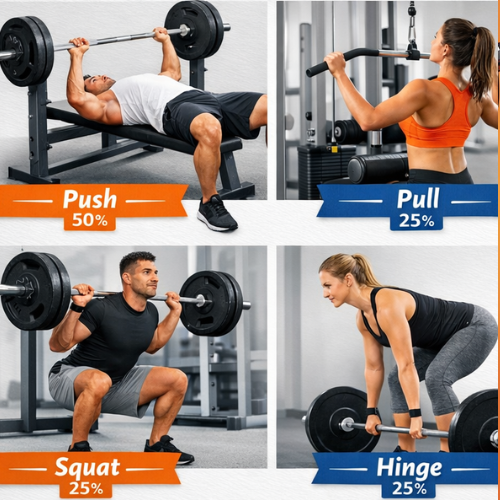
The 4 Essential Strength Movements
Instead of overcomplicating your training, focus on these four foundational movements:
• Push
• Pull
• Squat
• Hinge
These movements cover almost every major muscle group in your body.
1. Push Movement
Push movements train your upper body pushing muscles.
Examples:
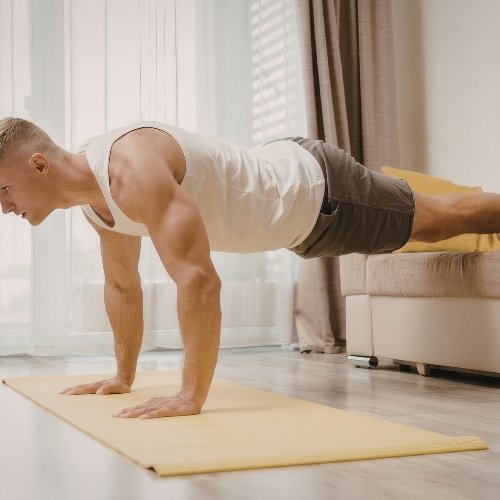
• Push-ups
• Chest press
• Shoulder press
Muscles Worked:
• chest
• shoulders
• triceps
Why It Matters
Push movements help you build upper body strength and stability.
They improve your ability to perform everyday actions like pushing objects and lifting overhead.
Beginner Tip
Start with bodyweight movements like push-ups.
Focus on:
• keeping your core tight
• controlled movement
• full range of motion
2. Pull Movement
Pull movements train your upper body pulling muscles.
Examples:
• Rows
• Lat pull-downs
• Assisted pull-ups
Muscles Worked:
• back
• biceps
Why It Matters
Pull movements improve posture and balance out pushing exercises.
They are essential for building a strong, stable back.
Beginner Tip
Focus on squeezing your back muscles during each repetition.
Avoid using momentum — control the movement.
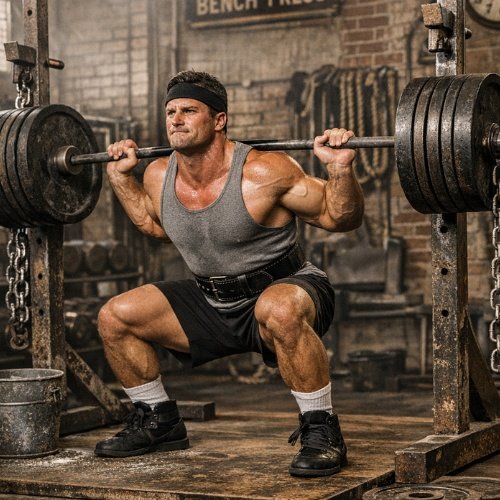
3. Squat Movement
Squats are one of the most important lower-body movements.
Examples:
• Bodyweight squats
• Goblet squats
• Machine squats
Muscles Worked:
• quadriceps
• glutes
• hamstrings
Why It Matters
Squats build lower-body strength and improve overall mobility.
They also support everyday movements like sitting, standing, and lifting.
Beginner Tip
Keep your chest up and your knees aligned with your toes.
Start with bodyweight before adding resistance.
4. Hinge Movement
Hinge movements focus on bending at the hips.
Examples:
• Deadlifts
• Romanian deadlifts
• Hip hinges
Muscles Worked:
• glutes
• hamstrings
• lower back
Why It Matters
Hinge movements build posterior strength — one of the most important areas for overall performance and injury prevention.
Beginner Tip
Focus on pushing your hips back, not bending your knees excessively.
Keep your back neutral and controlled.
Why These 4 Movements Are Enough
These four movements create a complete foundation.
When combined, they:
• train your entire body
• improve coordination
• support strength development
• create balance in your training
You don’t need more — you need consistency with these basics.
How to Build a Simple Routine
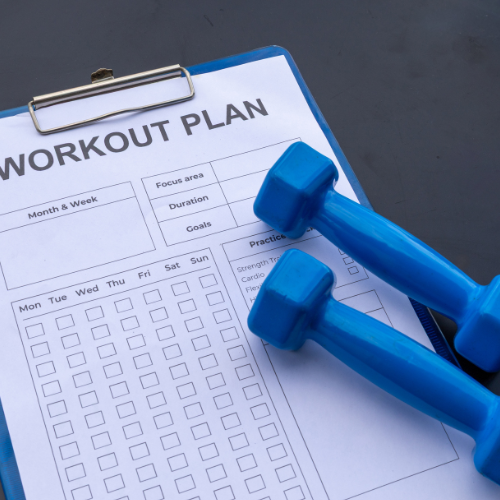
You can create an effective workout using just these movements.
Example Beginner Workout:
• Squats — 3 sets
• Push-ups — 3 sets
• Rows — 3 sets
• Deadlifts or hinges — 3 sets
Simple. Balanced. Effective.
Focus on Mastery, Not Variety
Many beginners make the mistake of constantly changing exercises.
But progress comes from repetition.
When you repeat the same movements:
• your form improves
• your strength increases
• your confidence grows
Mastery leads to results.
How This Connects to Long-Term Progress
These movements are not just for beginners.
They remain important at every level.
As you progress, you will:
• increase weight
• improve control
• refine technique
But the foundation stays the same.
Supporting Your Training With Structure
While these movements are essential, structure is what brings everything together.
A guided program helps you:
• apply these movements correctly
• progress safely
• stay consistent
If you want a complete system, the structured Programs inside VitalSpark are designed to help you build strength using these foundational movements.
The Role of Nutrition in Strength
Strength training works best when supported by proper nutrition.
When combined with a balanced meal plan:
• recovery improves
• strength increases
• energy stays consistent
This creates a complete fitness system.
Final Thoughts: Master the Basics First
You don’t need advanced workouts to see results.
You need a strong foundation.
By focusing on:
• push
• pull
• squat
• hinge
You build the base for everything else.
Keep it simple.
Stay consistent.
Focus on progress.
Because the strongest results come from mastering the basics.
Ready to Build Sustainable Progress?
VitalSpark helps you train smarter, recover better, and stay consistent with structured workouts, smart nutrition, and real-life support.
Start Your Fitness Transformation Today — Free Guide Included
Ready to take the guesswork out of your fitness journey?
Get your FREE copy of the Beginner Fitness Transformation Guide + Flipbook and learn how to build strength, improve your nutrition, and stay consistent — without burnout or confusion.
This step-by-step system is designed for real life, helping you create sustainable progress with clear structure and simple habits.
Or enter your email below and get instant access to your free guide.