One of the biggest reasons people struggle with fitness is not a lack of motivation — it’s a lack of structure.
They work out randomly.
They follow different routines each week.
They try to do too much too soon.
And eventually, they stop.
The truth is:
You don’t need a complicated routine to see results.
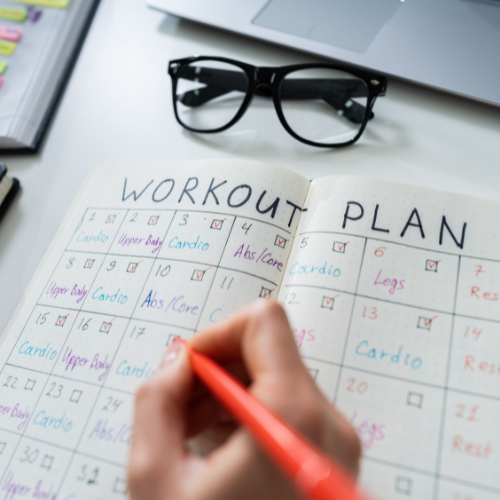
You need a simple weekly workout plan that fits your life and keeps you consistent.
Why Most Workout Plans Fail
Many workout plans look good on paper — but fail in real life.
Common reasons include:
Too Complicated
Too many exercises and details make it hard to follow.
Too Time-Consuming
Long workouts don’t fit into busy schedules.
Unrealistic Expectations
Trying to train like an advanced athlete as a beginner.
Lack of Flexibility
No room to adjust based on energy or time.
When a plan doesn’t fit your lifestyle, consistency breaks.
What Makes a Workout Plan “Stick”
A plan only works if you follow it.
A simple weekly workout plan should be:
• easy to understand
• realistic for your schedule
• balanced and structured
• flexible when needed
The goal is not perfection.
The goal is consistency.
Start With Your Weekly Schedule
Before choosing exercises, look at your week.
Ask yourself:
“How many days can I realistically train?”
For beginners:
• 3 days → great starting point
• 4 days → ideal for faster progress
• 5+ days → optional, not required
Be honest.
A plan you can follow is better than one you abandon.
Keep Your Workouts Simple
Each workout should be straightforward.
A good beginner session includes:
• 4–6 exercises
• 2–3 sets per exercise
• 8–12 repetitions
Focus on:
• proper form
• controlled movement
• consistency
You don’t need complexity to make progress.
Use a Full-Body or Split Structure
Two simple options:
Full-Body Plan (Best for Beginners)
Train your entire body each session.
Example:
• Day 1 — Full Body
• Day 3 — Full Body
• Day 5 — Full Body
Upper/Lower Split (Next Step)
Divide workouts:
• Day 1 — Upper Body
• Day 2 — Lower Body
• Day 4 — Upper Body
• Day 5 — Lower Body
Both work — choose what fits your schedule.
Include the Right Exercises
Your plan should include basic movement patterns:
• push (push-ups, presses)
• pull (rows, pull-downs)
• squat (bodyweight or weighted)
• hinge (deadlift variations)
• core work
These movements build a strong, balanced foundation.
Don’t Forget Recovery
Rest is part of your plan.
Without recovery:
• performance drops
• fatigue increases
• injury risk rises
Include:
• 1–2 rest days per week
• light activity if needed
Recovery supports progress.
Build Around Your Lifestyle
Your workout plan should fit your life — not control it.
If you’re busy:
• shorten your sessions
• train at home when needed
• keep exercises simple
Flexibility keeps you consistent.
Example Simple Weekly Workout Plan
Here’s a beginner-friendly example:
Day 1 — Full Body
Squats, push-ups, rows, core
Day 2 — Rest or Light Activity
Day 3 — Full Body
Lunges, shoulder press, pull-downs, core
Day 4 — Rest
Day 5 — Full Body
Repeat Day 1 or variation
Weekend — Rest or Active Recovery
Simple. Balanced. Effective.
How to Stay Consistent
Consistency is what makes your plan work.
To stay on track:
• schedule your workouts like appointments
• start small (use the 10-minute rule when needed)
• focus on showing up — not perfection
Even short workouts count.
Adjust as You Progress
Your plan should evolve.
As you improve:
• increase weight gradually
• improve form
• add small challenges
You don’t need to change everything — just improve over time.
Connecting Your Plan With Nutrition
A workout plan works best when supported by proper nutrition.
When combined with a structured meal plan:
• energy improves
• recovery becomes faster
• results become more consistent
This is where real progress happens — when everything works together.
Why Simplicity Wins Every Time
Complex plans may look impressive.
But simple plans get results.
Because simple plans:
• are easier to follow
• reduce decision fatigue
• support consistency
And consistency always wins.
Final Thoughts: Build a Plan You Can Follow
You don’t need the perfect workout plan.
You need a plan you’ll actually stick to.
Start simple.
Stay consistent.
Build gradually.
Because real results come from what you do every week — not what you do once.
Start Your Fitness Transformation Today — Free Guide Included
Ready to take the guesswork out of your fitness journey?
Get your FREE copy of the Beginner Fitness Transformation Guide + Flipbook and learn how to build strength, improve your nutrition, and stay consistent — without burnout or confusion.
This step-by-step system is designed for real life, helping you create sustainable progress with clear structure and simple habits.
Or enter your email below and get instant access to your free guide.