When it comes to improving flexibility and movement, two terms often get used interchangeably:
Mobility and stretching.
At first, they may seem like the same thing.
But in reality, they serve different purposes.
Understanding the difference can help you:
• move better
• reduce injury risk
• improve performance
• recover more effectively
If you want to train smarter and feel better, knowing when to use each is essential.
What Is Stretching?
Stretching focuses on lengthening muscles.
It helps improve flexibility by increasing the range your muscles can extend.
There are two main types:
Static Stretching
This involves holding a stretch for a period of time.
Example:
• touching your toes and holding the position
Best used:
• after workouts
• during recovery sessions
Dynamic Stretching
This involves controlled movement through a range of motion.
Example:
• leg swings
• arm circles
Best used:
• before workouts as part of a warm-up
Explore Recovery & Mobility Program
What Is Mobility?
Mobility is your ability to move a joint through its full range of motion with control.
It’s not just about flexibility — it’s about strength and coordination within that range.
Mobility combines:
• flexibility
• strength
• control
It allows your body to move efficiently and safely.
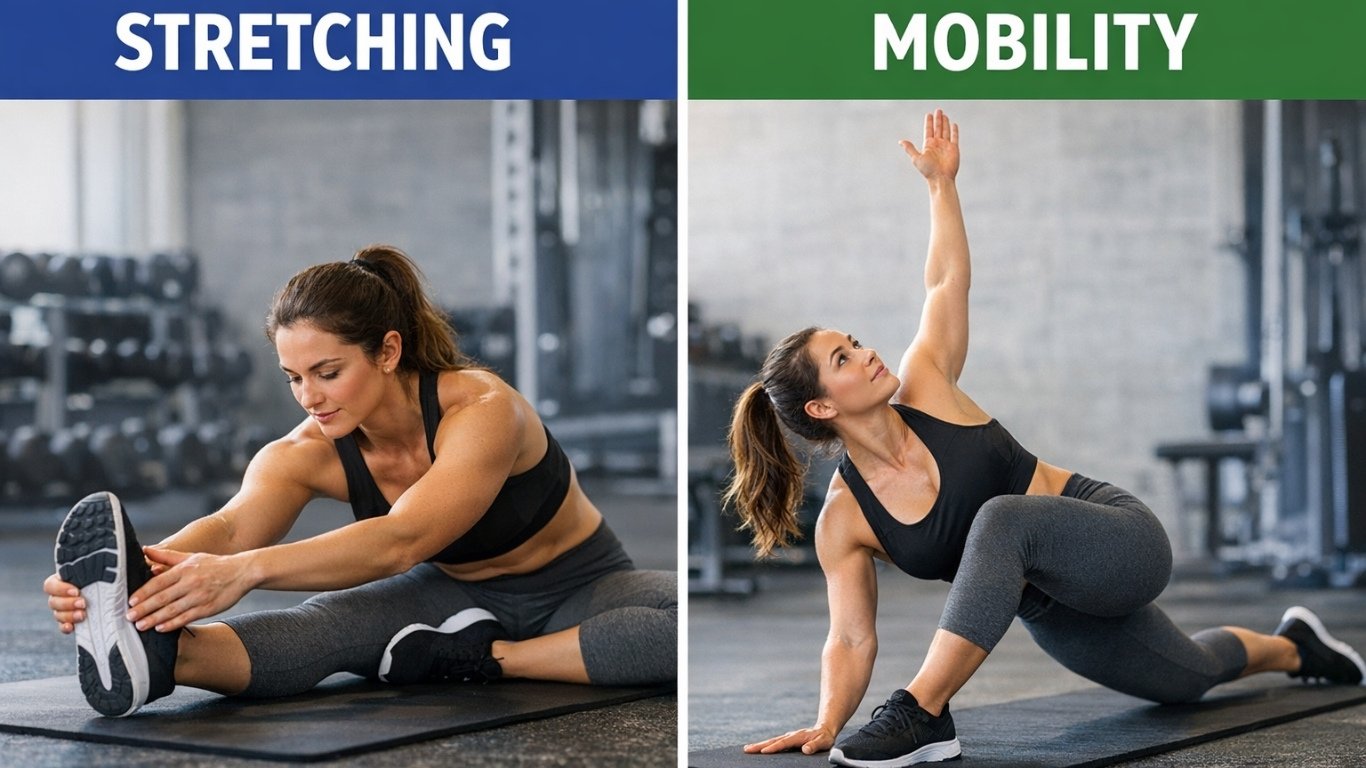
Key Difference Between Mobility and Stretching
The simplest way to understand it:
Stretching improves muscle length.
Mobility improves movement control.
Stretching
• passive
• focuses on muscles
• increases flexibility
Mobility
• active
• focuses on joints and movement
• improves strength within range
Why Mobility Is So Important
You can be flexible — but still lack mobility.
For example:
You may be able to stretch your hamstrings,
but struggle to perform a proper squat.
That’s because mobility requires control, not just flexibility.
Good mobility helps you:
• move efficiently
• maintain proper form
• reduce injury risk
• improve overall performance
When You Should Focus on Stretching
Stretching is most effective when:
• your muscles feel tight
• after workouts
• during recovery days
• to improve flexibility over time
It helps your body relax and recover.
When You Should Focus on Mobility
Mobility should be part of your regular routine.
Use mobility work:
• before workouts
• during warm-ups
• to improve movement patterns
• to enhance strength and control
Mobility prepares your body for performance.
Mobility vs Stretching for Beginners
If you’re just starting, you don’t need to choose one over the other.
You need both.
Simple Approach
Before workouts:
• use dynamic stretches and mobility exercises
After workouts:
• use static stretching
This creates a balanced system.
Common Mistakes to Avoid
Only Stretching Without Mobility
This improves flexibility but not movement quality.
Skipping Mobility Work
This limits performance and increases injury risk.
Overstretching Before Workouts
Static stretching before training can reduce strength output.
Simple Mobility Routine Example
Try this before your workout:
• arm circles — 30 seconds
• leg swings — 30 seconds each side
• hip circles — 30 seconds
• bodyweight squats — 10 reps
This prepares your body for movement.
Read Next: The Beginner Fitness Guide
Simple Stretching Routine Example
After your workout:
• hamstring stretch — 20–30 seconds
• quad stretch — 20–30 seconds
• chest stretch — 20–30 seconds
• shoulder stretch — 20–30 seconds
This helps your body recover.
How This Improves Your Fitness Results
When you combine mobility and stretching:
• your movement improves
• your workouts feel smoother
• your recovery becomes faster
• your injury risk decreases
You build a more complete fitness system.
Connecting This With Your Training
Mobility and stretching should support your overall routine.
When combined with structured training and nutrition:
• performance improves
• consistency increases
• progress becomes more sustainable
Inside VitalSpark, training, recovery, and mobility are designed to work together — not separately.
Final Thoughts: Use Both for Best Results
Mobility and stretching are not competing methods.
They are complementary tools.
Stretching helps your muscles relax.
Mobility helps your body move better.
When used together, they create balance.
And balance leads to long-term progress.
Focus on movement.
Stay consistent.
Build strength with control.
Start Your Fitness Transformation Today — Free Guide Included
Ready to take the guesswork out of your fitness journey?
Get your FREE copy of the Beginner Fitness Transformation Guide + Flipbook and learn how to build strength, improve your nutrition, and stay consistent — without burnout or confusion.
This step-by-step system is designed for real life, helping you create sustainable progress with clear structure and simple habits.
Or enter your email below and get instant access to your free guide.